Choosing Window and Siding Materials
Orientation — what this is
When you’re comparing windows and siding, you’re really comparing materials and how they perform. The cheapest option might not hold up in our climate, and the most expensive option might outperform what your situation actually calls for.
The material you choose determines how long it’ll last, how much maintenance it demands, and what it costs you in heating and cooling every single year.
Most vinyl window and door systems you’ll see around here fall into a middle range — decent durability, reasonable cost, and predictable performance. Wood is traditional but needs ongoing upkeep. Aluminum is strong but conducts heat. Fiberglass is durable but expensive. Each has trade-offs, and each has a place depending on what you’re trying to accomplish and how much you want to maintain it.
The reference table
| Material | Durability | Maintenance | Cost range |
|---|---|---|---|
| Vinyl | 20–30 years | Minimal — clean frames yearly | $ |
| Wood | 20–40 years (if maintained) | High — repainting every 4–7 years | $$ |
| Aluminum | 30+ years | Low — occasional cleaning | $–$$ |
| Fiberglass | 40+ years | Low — minimal maintenance | $$$ |
| Cost is per-unit; total project cost depends on size and complexity. Durability assumes proper installation and climate-appropriate product selection. | |||
The key figures
U-factor
Measures how much heat escapes through the window. Lower is better. The NFRC label shows this number in decimals (0.20 to 0.40). In our climate, look for 0.30 or better.
Solar heat gain
How much solar energy enters through the window. Ranges from 0 to 1. Lower reduces cooling costs in summer. Winter sun through south-facing windows can reduce heating costs, so the best choice depends on your orientation.
Air leakage
Measured in cubic feet per minute at a pressure difference. Lower numbers mean a tighter seal. The NFRC label shows this; 0.30 or less is considered tight, and most modern windows meet this standard.
The detail
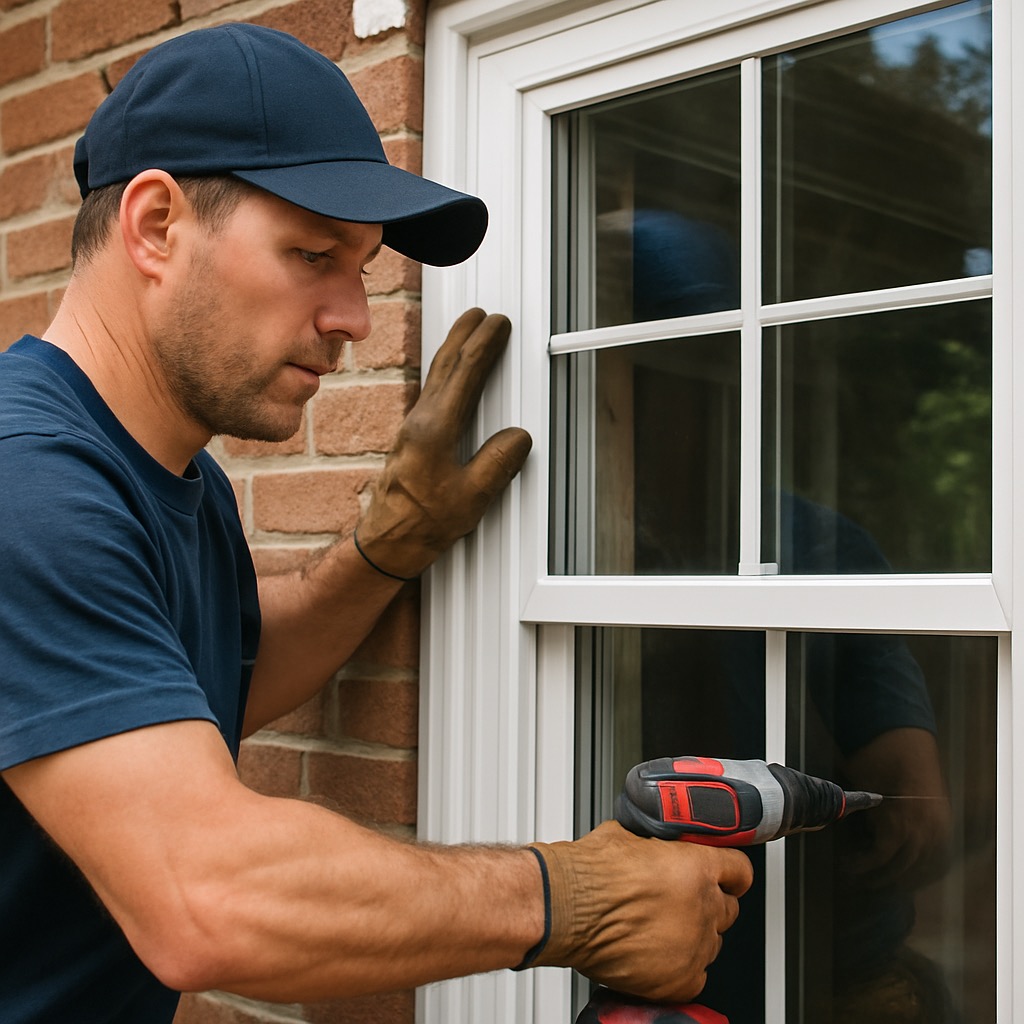
Installation quality matters as much as material choice. A window with a perfect NFRC rating will leak air if it’s installed wrong. Gaps around the frame, poor caulking, or skipped flashing means water gets behind the frame and rots the structure.
Most of the window and door failures we’ve seen came down to installation, not the window itself. A licensed, insured contractor who follows the manufacturer’s specs and the state building code makes the difference between a window that lasts thirty years and one that fails in ten.
If you’re hiring someone, ask whether they follow the installation specs. Ask if they seal and flash properly. That’s the line between professional work and cut corners.
Installation process
This video walks through professional vinyl siding installation from start to finish. The techniques shown here apply to window and door installation too — preparation, fastening, and weatherproofing are the fundamentals.
Whether you’re watching someone else do the work or planning to tackle it yourself, the principles are the same: measure twice, cut once, and don’t skip the weatherproofing steps. That’s where the durability comes from.