What Window and Siding Work Costs Before You Sign an Estimate
Window and siding work is one of those projects where the sticker shock hits before the work starts. The price depends on so many variables — your house’s age, the materials you’re upgrading to, the state of the framing underneath — that “typical cost” is almost useless. But once you understand what drives the price, the numbers make sense. We’ve learned the hard way what the cheap estimates miss and what the expensive ones are actually paying for.
The cheapest estimate is often expensive in the long run — it usually means someone is skipping the steps that keep water out and frames dry.
The mistake most people make
Comparing on frame price alone
A vinyl window at a big-box store costs $150–200. A quality frame from a specialized window company costs $300–500. The difference is engineering — energy ratings, air sealing, warranty, and longevity. But people see the dollar difference and sometimes choose wrong. What looks like savings in the purchase price becomes expensive when a window fails early or doesn’t seal against weather.
Thinking labor is a flat cost
Installation takes longer and costs more when the opening is damaged, the framing is out of square, or the surrounding wall needs repair. What looked straightforward in estimates becomes complicated on-site. A good contractor budgets for this; a cheap one skips the repair and you get a leak.
Missing the exterior work
Flashing, caulking, and exterior casing — the stuff that stops water — is easy to overlook in estimates. It’s also easy for a contractor to skimp on. That’s where water damage starts five years later.
Step through it
Get three written estimates
Each should list the frame model, materials, labor hours, and exterior finishing work separately. If one estimate is 40% cheaper than the others, ask why. The answer is usually that they’re leaving something out.
Ask about opening preparation
Will they inspect for rot, repair damaged framing, replace flashing, and seal the opening properly? This is where the real cost lives, and it’s also where corners get cut.
Check the warranty
A good window frame comes with a 10+ year warranty on the glass and mechanism. On labor, look for 2–3 years. If the contractor won’t warrant their work, they’re not confident in it.
Talk to the actual crew
If you can, meet the people installing the window. Ask how they seal openings, what they do if they find rot, and how long they expect to be there. A contractor who answers these questions directly is someone worth paying.
What it typically costs
For a standard 3×4 double-hung window
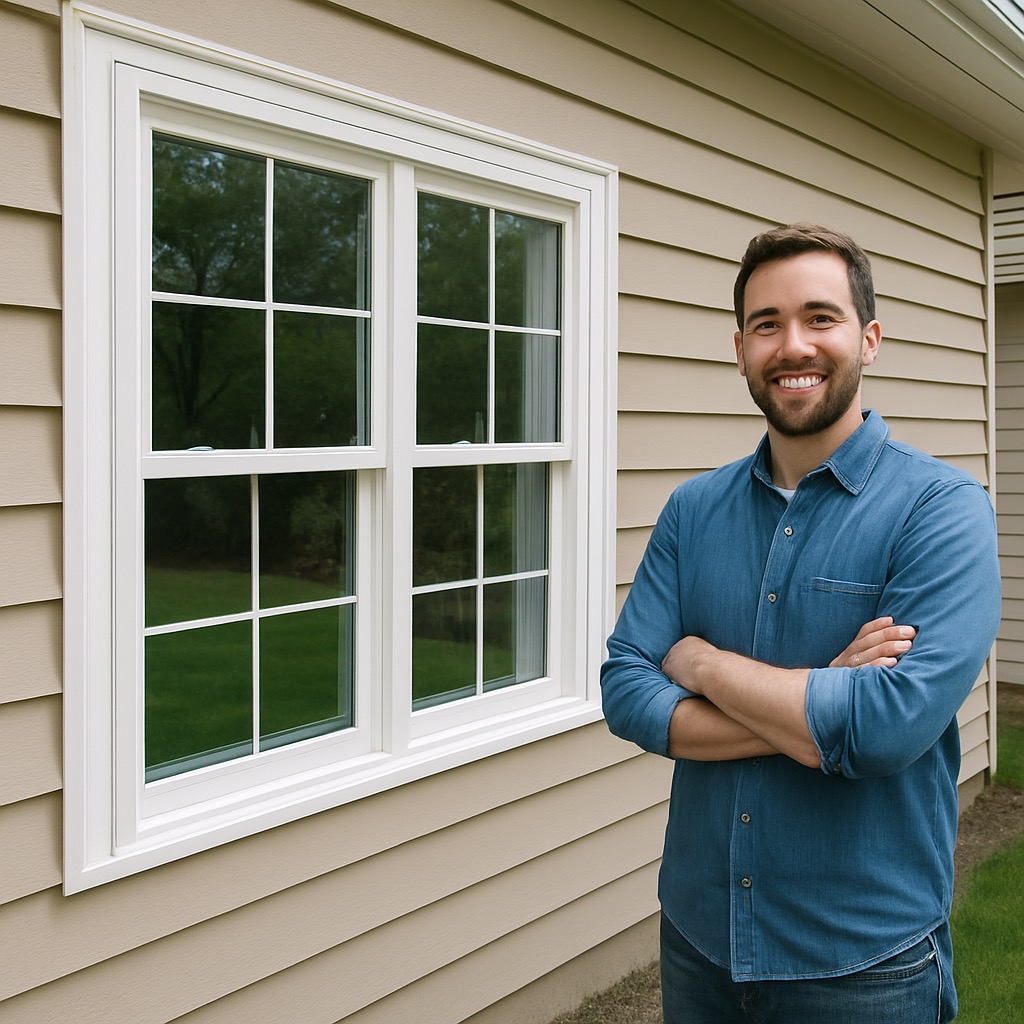
The frame itself runs $250–450 for a quality vinyl unit. Installation labor adds $300–600 depending on complexity. Exterior finishing (flashing, caulk, casing) is another $100–300. Total: $650–1,350 per window. That’s the price where good work lives. If you get an estimate under $500 per window installed, something is being left out. If it’s over $1,500 for a standard window, you’re paying for specialty features or repairs beyond the scope.
For sliding doors (6 feet wide by 6.5 feet tall), expect $800–1,500 installed. Custom or specialty sizes run higher. Casement windows (the kind that crank out) usually cost 20% more than double-hung because they have more mechanism to engineer.

A real number to work with
We recently had four windows and a sliding door replaced. The frames were high-efficiency vinyl (Energy Star rated for Eastern Washington), and the opening repair was minor. Total cost: $4,200 installed. That was $840 per window plus the sliding door, plus the opening prep work. The crew spent two full days on it, the work was meticulous, the windows don’t rattle, and there’s no cold draft around the frames.
If you’re doing a full-house window replacement (10–15 windows), the per-window cost usually drops 10–15% because the contractor’s overhead spreads across more units. A siding replacement can save money too if you’re doing the exterior casing at the same time, because the crews don’t have to set up twice or coordinate multiple jobs.
The questions that tell you if an estimate is honest
“What do you do if you find rot in the frame?” A good answer is “we replace it and let you know the additional cost.” A bad answer is “that usually doesn’t happen” — it does, and it’s common in older houses. “How do you seal the opening?” They should describe flashing tape, caulk, and interior finishing without making it sound like an extra. “What about the exterior?” They should mention exterior casing or trim, depending on your siding type.
If they skip this part of the conversation, they skip it on the job site too. The best indicator of honest pricing is when a contractor is willing to show you examples of their work, introduce you to previous clients if you ask, and explains their process without making it sound like they’re doing you a favor. That’s who you want holding a drill near your framing.